


Most organizations still treat website optimization as a project.
Every few months analytics are run. Someone notices an outdated page. Marketing rewrites a title tag. An SEO audit is ordered. A developer fixes technical issues when time allows.
The slow cycle perpetuates and the result is predictable: websites slowly drift out of date between optimization cycles. The world of search algorithms, AI search, and regulations is evolving faster than manual reviews and revisions can keep up. The path of good intentions becomes paved with broken links and stale metadata.
The challenge isn’t that organizations don’t know these problems exist. It’s that there simply aren’t enough hours or budget to justify having talented people perform hundreds or thousands of tiny optimization tasks every week.
This is exactly where agentic workflows create an enormous opportunity.
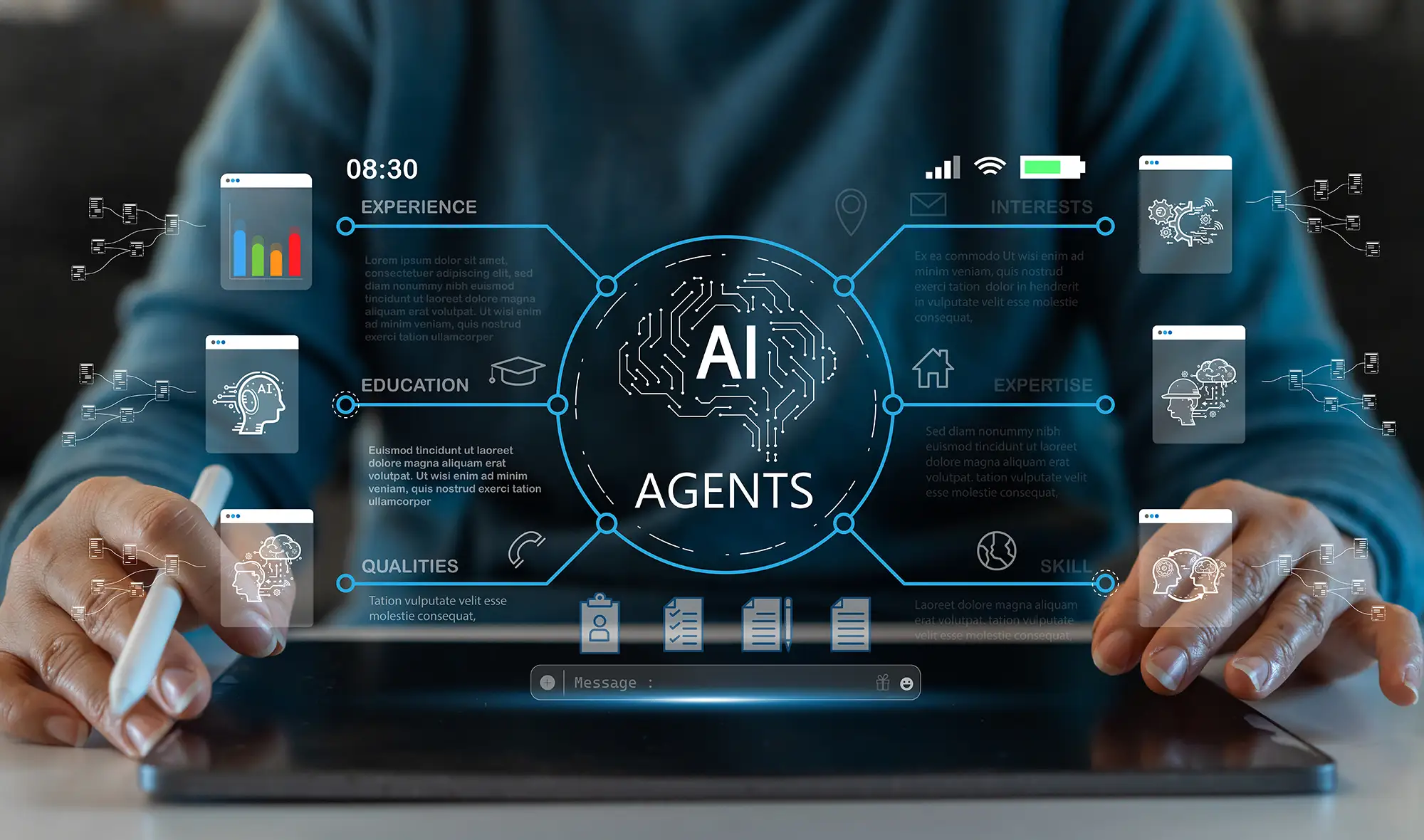
Instead of treating optimization as an occasional event, organizations can deploy AI agents that continuously monitor, evaluate, recommend, and even implement improvements every day.
The result is an “always-on” revision system that becomes more accurate, more compliant, and more competitive over time.
What Is an Agentic Workflow?
Most people are familiar with conversational AI. You ask ChatGPT a question. It gives you an answer.
An agentic workflow is fundamentally different. Instead of responding to a single prompt, an AI agent is assigned an ongoing objective.
For example, you can ask an agentic workflow to:
- Monitor every page on our website
- Identify technical SEO issues
- Detect legal compliance risks
- Watch for AI search changes
- Improve metadata
- Report findings
- Recommend or implement fixes
Agentic workflows combine reasoning, planning, tools, and memory to accomplish objectives over time instead of completing isolated tasks.
Rather than waiting for a human to notice a problem, the agent proactively looks for opportunities and acts within predefined boundaries. Think of it less like a chatbot and more like a highly capable digital team member that never sleeps, forgets, or gets tired of repetitive work.
What Does “Always-On” Mean?
“Always-on” doesn’t necessarily mean an AI is making changes every minute. It means the workflow is continuously running daily, weekly, hourly, or whatever cadence makes sense for the organization.
The workflow continually asks questions such as:
- Has anything changed?
- Are there new SEO recommendations?
- Have search engines updated best practices?
- Did AI search introduce new citation behaviors?
- Are pages missing schema?
- Did someone accidentally remove metadata?
- Is content becoming outdated?
- Has a compliance issue appeared?
Instead of waiting for quarterly audits, the website is evaluated continuously. This dramatically reduces the amount of technical debt that accumulates over time and catches problems while they’re still small.
Why Are Websites Perfect Candidates for Agentic Workflows?
Websites generate an enormous number of small tasks.
Individually, many aren’t worth billing a consultant for. But collectively, they’re incredibly valuable.
Examples include:
- Updating title tags
- Reviewing meta descriptions
- Checking structured data
- Finding broken internal links
- Identifying duplicate content
- Monitoring Core Web Vitals
- Reviewing accessibility issues
- Checking image optimization
- Detecting outdated promotions
- Monitoring compliance language
- Identifying thin pages
- Auditing redirects
- Comparing rankings
- Watching AI search visibility
No marketing department wants to pay someone eight hours every week just to check whether 600 pages still have optimal title tags. But an AI agent can at essentially no additional labor cost.
A Practical Architecture for Always-On Agentic Workflows
One misconception about AI agents is that a single model does everything. But in practice, most reliable systems work as teams. Different models perform different roles based on their strengths.
A common architecture looks like this:
Layer One: Strategic Reasoning
A large reasoning model such as OpenAI Codex, Claude Opus, or another frontier model acts as the strategist. Its responsibilities include:
- Understanding business goals
- Evaluating SEO strategy
- Interpreting AI search developments
- Prioritizing opportunities
- Planning improvements
- Deciding which issues deserve attention
This model thinks before anything changes.
Layer Two: Specialized Workers
Smaller, faster, less expensive models perform execution. Examples include:
- Rewriting title tags
- Updating meta descriptions
- Generating schema markup
- Drafting image alt text
- Classifying pages
- Checking internal links
- Creating implementation suggestions
- Updating CMS fields
These models complete narrowly defined tasks extremely efficiently.
Layer Three: Human Review
In most any system, humans should still remain responsible for judgment. That includes:
- Reviewing recommendations
- Approving significant changes
- Handling brand voice
- Evaluating legal considerations
- Confirming strategic direction
The AI performs the repetitive work, but people make the important decisions. This architecture creates systems that are dramatically faster while remaining aligned with organizational goals.
RELATED: The Growth Engine Framework: Why Tactics Without Strategy Plateau
Real-World Examples of Agentic AI Use
We have successfully implemented agentic workflows with clients. Here are a couple quick cases.
A Nationally Recognized Mental Health Platform
As with nearly all healthcare organizations, this one operates in a regulated environment where website content can create legal exposure if it becomes inaccurate.
A specialized AI agent with secure back-end WordPress access crawls the website every day to identify compliance issues.
For example, it searches for expired coupon codes or promotional offers that no longer contain appropriate expiration language. What might seem insignificant at first glance can become a legal concern if promotional claims remain online after they expire.
Instead of relying on someone to manually inspect hundreds of pages every month, the AI continuously watches for violations. When the workflow identifies one, it can automatically correct the issue and send the change for human approval, notify them that a review is needed, or escalate higher-risk situations.
The result is faster response times, lower compliance risk, and significantly less manual work.
Crosley Law
Another implementation demonstrates how agentic workflows support search visibility.
For Crosley Law Firm, an AI agent continuously monitors both the organization’s website and the evolving SEO and AI-search landscape. Each day, the system:
- Reviews every page
- Audits technical SEO
- Evaluates metadata
- Identifies optimization opportunities
- Tracks changes in search guidance
- Suggests or implements improvements
Sometimes the recommendation is as simple as rewriting title tags. Other times it involves larger structural improvements. But the important point is consistency. Rather than conducting one large audit every year, the site receives continuous optimization.
Among numerous marketing efforts, this always-on workflow contributed to moving Crosley from page nine to page one for the highly competitive search term “personal injury lawyer San Antonio.”
That kind of improvement isn’t usually the result of one dramatic change, but the cumulative effect of hundreds of intelligent improvements made consistently over time.
RELATED: Practical AI As Your Growth Partner
The Human Role Is Becoming More Valuable, Not Less
One of the biggest misconceptions surrounding AI agents is that they eliminate people. The opposite is proving true.
AI is exceptionally good at repetitive analysis, but humans remain far better at strategy, creativity, ethical judgment, client communication, brand positioning, and aligning business priorities.
Instead of spending hours checking hundreds of pages for broken metadata, marketers can focus on the more engaging and higher-value goals they likely prefer to do. The AI handles the repetitive operational layer.
RELATED: Practical AI for Law Firm Intake: Human First Touch, AI Everywhere Else
How Can You Implement Agentic Workflows Safely?
As exciting as these systems are, organizations should resist the temptation to give AI unrestricted access. An AI with excessive permissions could unintentionally:
- Publish incorrect information
- Remove important content
- Introduce security vulnerabilities
- Break website functionality
- Damage SEO
- Expose confidential information
Responsible implementations follow several important principles.
Principle 1: Least Privilege
Agents should only have access to the systems they actually need.
Principle 2: Human Approval
High-impact actions should require review before publication. Minor updates may be automated, but strategic decisions should remain human-controlled.
Principle 3: Logging
Every recommendation, action, approval, and implementation should be recorded. Organizations need a complete audit trail.
Principle 4: Testing
Production websites are not places for experimentation. Changes should be validated before deployment.
Principle 5: Continuous Monitoring
AI agents should themselves be monitored regularly for:
- Accuracy
- Performance
- Security
- Drift
- Unexpected behavior
As AI becomes more capable, governance becomes equally important. The organizations that implement these systems responsibly will realize significant advantages, but those that rush implementation without appropriate safeguards will introduce unnecessary risk.
RELATED: Beware of Risk AI Website Building Practices

The Economics Have Changed
Perhaps the most important change isn’t technical, but economic.
Historically, organizations ignored thousands of small optimization opportunities because they couldn’t justify paying people to perform them.
Nobody wants to receive a monthly invoice because someone spent hours checking whether title tags were still optimal. It’s one of those unsung jobs that can be useful but doesn’t feel productive.
But an AI agent can perform those same checks every day. In turn, the organization only pays for the strategic, business-centered expertise that matters.
The Future Is Continuous Optimization
The internet is changing faster than ever, as are the ways we access and regulate it.
Organizations can no longer afford to optimize their websites once or twice each year. Instead, websites should become living systems that continuously improve through intelligent automation guided by human expertise.
The goal isn’t replacing marketers. It’s allowing AI to perform, at scale, the countless repetitive tasks that humans can’t reasonably justify billing for—especially as organizations face tighter budgets and increasing pressure to do more with less.
The firms that adopt always-on agentic workflows today will not only operate more efficiently, but also build websites that become smarter, safer, more compliant, and more competitive every single day.
Would you like to discuss how agentic workflows could work for your website? Contact LaFleur Marketing today and we’ll be happy to schedule a consultation with you.